
Products
Every product LawAccounting builds is designed to work on its own — and work even better together. Mix and match, or take the full suite. Either way, your data flows seamlessly from intake to invoice.
1
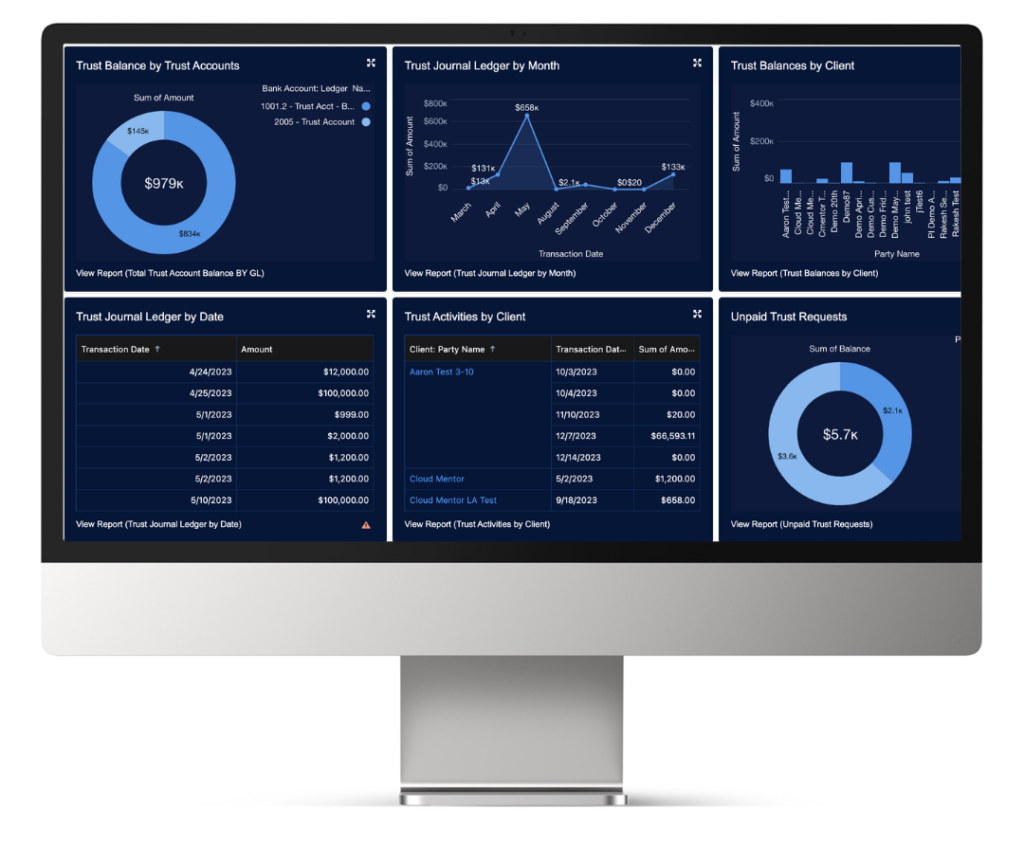
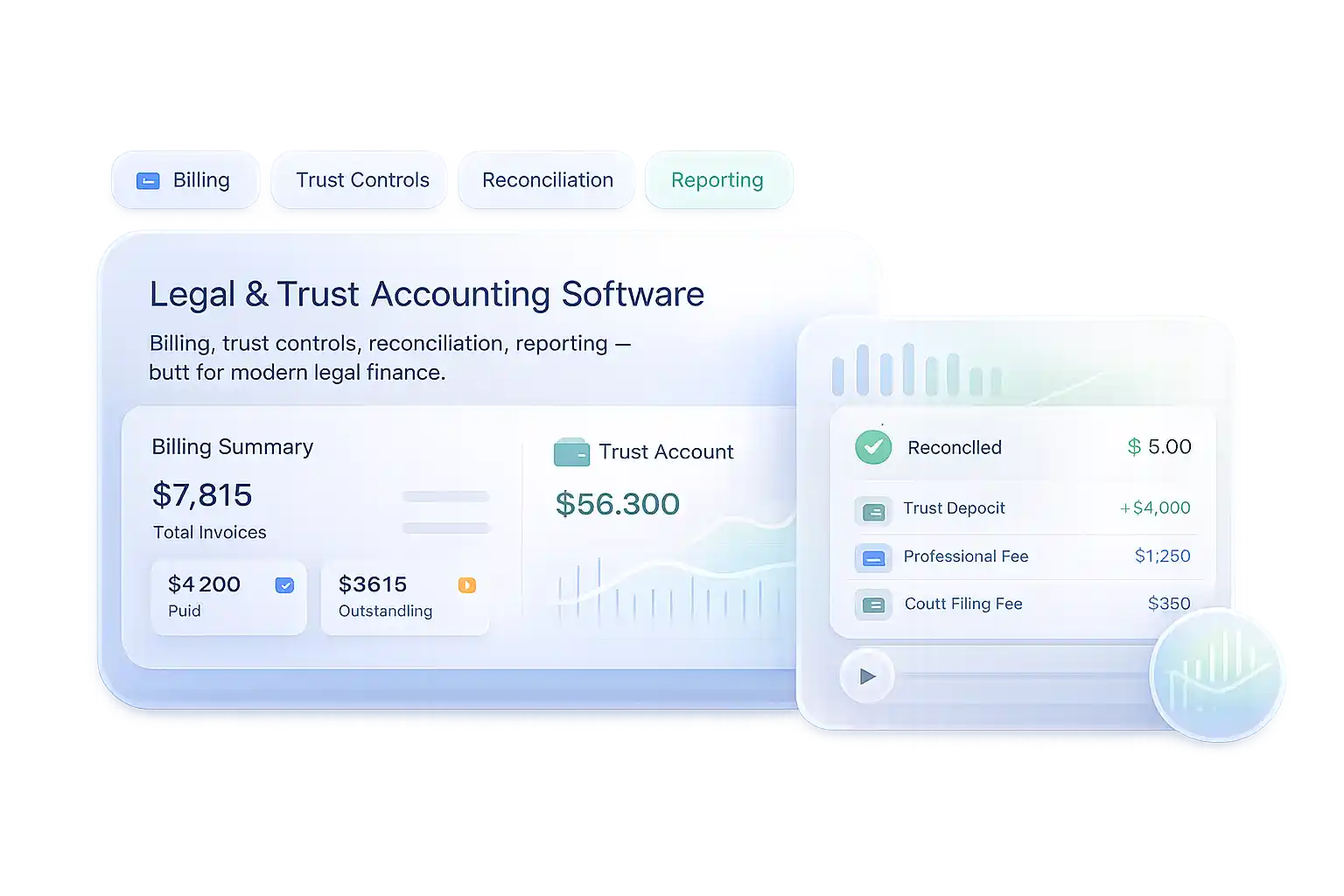
The financial backbone of your firm. LawAccounting handles trust accounting, three-way reconciliation, client ledgers, billing, and financial reporting — all compliant with state bar requirements. It’s the accounting system that actually understands how law firms work.
Key features:
• Trust & operating account management
• Three-way reconciliation
• Client trust ledgers
• LEDES billing
• Real-time financial reports
2

The command center for your practice. CaseQube manages every case from first contact to resolution — with AI-powered intake, automated workflows, intelligent checklists, and real-time dashboards. Built natively on Salesforce, it gives your firm the same platform infrastructure trusted by the world’s largest companies.
Key features:
• AI client intake with conflict checks
• Matter-centric workflows
• Automated deadlines & checklists
• Salesforce-native analytics

3

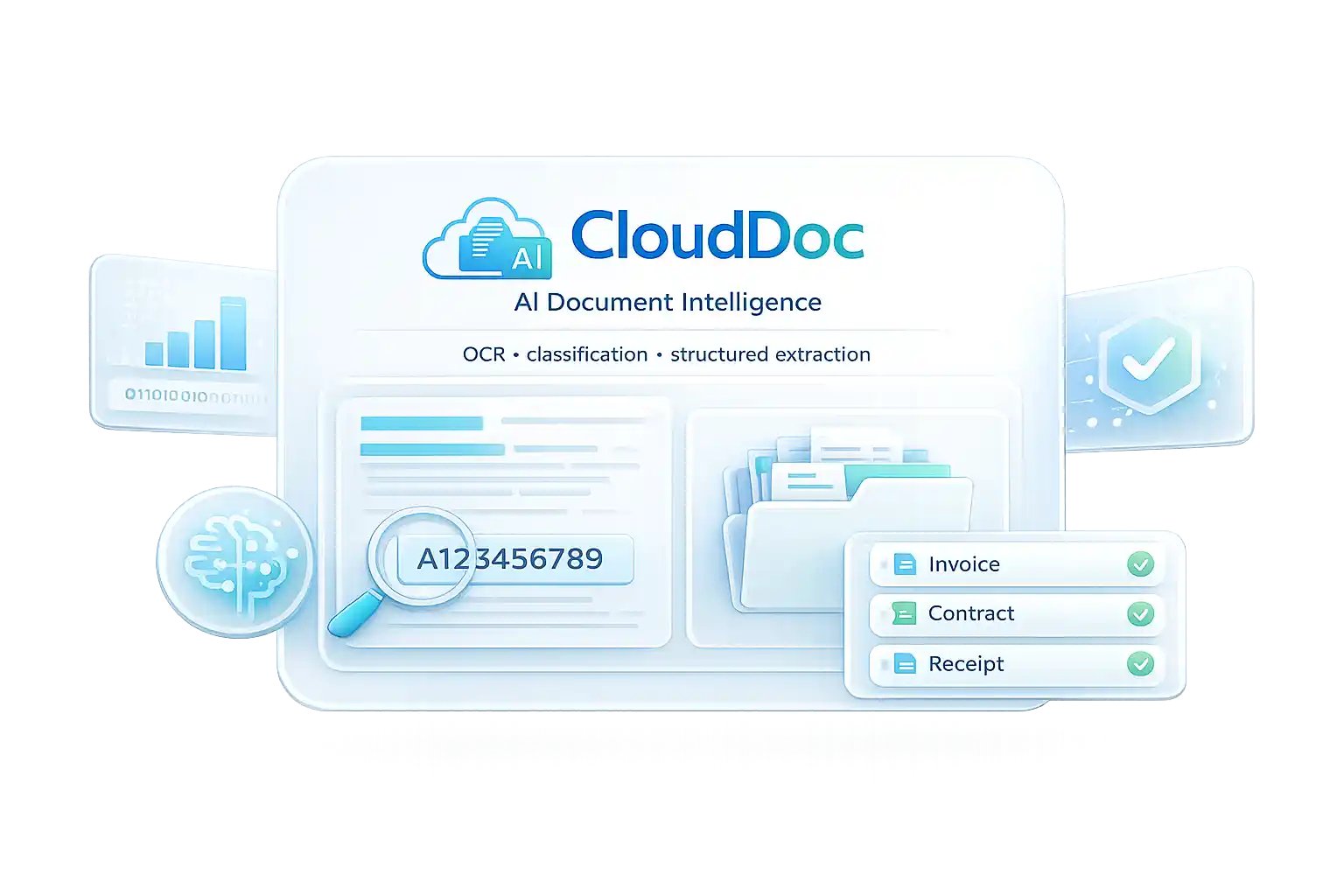
Every document, instantly findable. CloudDoc uses AI to automatically tag, classify, and organize every file your firm touches. Full-text search finds what you need in seconds. Version control ensures you’re always working on the right draft. Role-based access keeps sensitive files protected.
Key features:
• AI auto-tagging & classification
• Full-text search
• Version control
• Automated templates
• Role-based permissions
4

Get paid faster, with zero friction. Maahi turns tracked time into invoices and invoices into payments — automatically. Clients pay through secure, mobile-friendly portals. Every transaction syncs to your trust and operating accounts in real time. No manual reconciliation. No missed payments.
Key features:
• One-click invoice generation
• Secure payment links
• Mobile-friendly client portals
• Auto-posting to accounting
• Trust account compliance


Anna Shapiro
5.0
CaseQube has completely transformed how we operate. The AI-driven document management features are not only intelligent but intuitive—saving my team hours every week. The platform itself is smooth, well-integrated, and refreshingly easy to use. Most importantly, it has significantly reduced our operational costs without sacrificing capability. It’s clear that CaseQube was built with real law firm needs in mind.

Howard Greenberg
5.0
The immigration workflow in CaseQube is exactly what our firm needed—smart, efficient, and built for how immigration practices actually work. What impressed me even more was the seamless integration of accounting, which eliminated the need for separate systems. And the support? Outstanding. The CaseQube team has been with us every step of the way. I couldn’t be happier with the decision to implement it.

Brian Belt
5.0
I can't say enough about the software and the Law Accounting team. The software is fantastic. Fully customizable, robust and powerful. As good as the software is, the Law Accounting team is even better. They are incredibly responsive, creative, honest, pleasant and personable, highly competent and infintely patient as they worked with us to implement their software. They consistently underpromised and overdelivered. Anything less than a flawless implementation is unacceptable to this wonderful team. Thank you Law Accounting!
What software do law firms use to manage cases?
Law firms use legal practice management software to organize matters, track tasks, manage documents, and communicate with clients. Platforms like CaseQube provide a centralized system where attorneys can manage the entire lifecycle of a case from intake to resolution.
What is legal practice management software?
Legal practice management software helps law firms manage their daily operations including client intake, case tracking, document management, time tracking, billing, and reporting. It allows law firms to operate efficiently while keeping all case information organized in one system.
What is legal accounting software?
Legal accounting software is designed specifically for law firms to manage financial transactions while complying with legal regulations. It includes features such as trust accounting, legal billing, financial reporting, and expense tracking.
Why is trust accounting important for law firms?
Trust accounting ensures that client funds are kept separate from the firm’s operating funds. Law firms are required by bar regulations to maintain accurate trust account records and perform regular reconciliations to ensure compliance.
What is IOLTA accounting?
IOLTA (Interest on Lawyers’ Trust Accounts) refers to special trust accounts used by law firms to hold client funds. Legal accounting systems help manage these accounts by tracking deposits, withdrawals, and balances for each client.
What is contingency billing in law firms?
Contingency billing is a fee arrangement where a law firm is paid only after winning or settling a case. The attorney typically receives a percentage of the settlement amount, and legal accounting systems help calculate and distribute settlement funds correctly.
What is legal billing software?
Legal billing software allows law firms to track billable time, generate invoices, manage payment collections, and monitor revenue. It supports multiple billing methods such as hourly billing, flat fees, and contingency fees.
How do law firms manage documents?
Law firms use document management systems to securely store, organize, and retrieve legal documents. Modern platforms like CloudDoc use AI and OCR technologies to classify documents and make them searchable across matters.
What is AI document management for law firms?
AI-powered document management systems automatically categorize documents, extract key data, and improve search capabilities. This helps law firms manage large volumes of documents more efficiently.
What is matter management in legal software?
Matter management refers to the process of organizing all information related to a legal case, including clients, documents, tasks, deadlines, and financial transactions.
How can law firms automate workflows?
Legal software platforms allow firms to automate repetitive processes such as client intake, task creation, document generation, and billing cycles, improving efficiency and reducing manual work.
What is client intake software for law firms?
Client intake software helps law firms collect information from potential clients through forms, questionnaires, or chat-based systems. The data is then automatically converted into matters within the practice management system.
Can legal practice management software replace multiple tools?
Yes. Modern legal platforms combine case management, accounting, document management, billing, and reporting into a single system, reducing the need for multiple separate tools.
What is cloud-based legal software?
Cloud-based legal software is hosted online and accessible from anywhere with secure login access. This allows attorneys and staff to access case data, documents, and financial information remotely.
What are the benefits of integrated legal software?
Integrated legal software allows law firms to manage cases, documents, finances, and communications in one platform. This improves visibility, reduces duplicate data entry, and increases operational efficiency.
What security features should legal software have?
Legal software should provide secure access controls, encrypted data storage, activity audit logs, and secure cloud infrastructure to protect sensitive client information.
Can legal software integrate with payment systems?
Yes. Many legal platforms integrate with payment processors, allowing law firms to accept credit card and ACH payments directly from client invoices.
How does legal software improve law firm productivity?
By automating tasks, organizing case data, and improving collaboration, legal software allows attorneys and staff to spend less time on administrative work and more time serving clients.
What reports should law firms track?
Law firms typically monitor financial reports such as profit and loss statements, trust balances, accounts receivable, billing performance, and attorney productivity metrics.
How can law firms choose the right legal software?
When selecting legal software, firms should evaluate features such as case management capabilities, accounting compliance, document management, scalability, integrations, and security.
Get a guided walkthrough and we’ll map the right products to your firm’s workflows.